First Day of Preschool Checklist
Supporting Families on the First Day of Preschool
If your child is starting preschool this fall, you’re probably feeling excited, nervous, and everything in between. That’s completely normal. The first day of preschool is a major milestone in your child’s life, and a little preparation goes a long way toward making it a positive experience for everyone.
This checklist is designed as a practical, printable-style guide that families can follow in the weeks and days before school starts. We cover everything from “before enrollment” through “the night before,” “the morning of,” and “after your first pick-up”. Directors and preschool teachers are encouraged to share this resource with new families as part of their welcome package or digital onboarding process.
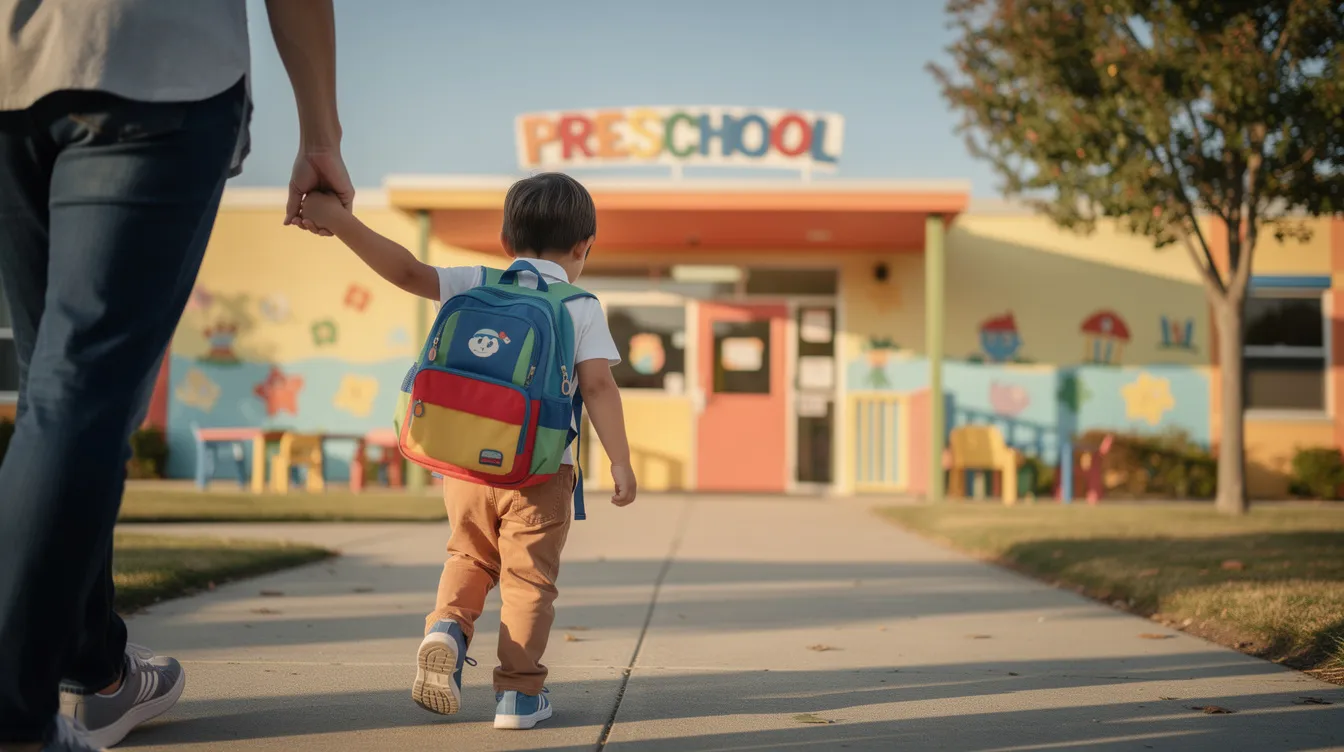
Before Enrollment: Questions to Ask Your Preschool
The first step toward a smooth first day is choosing and understanding the right preschool or child care program. During tours or enrollment meetings, ask direct questions so you know what to expect:
- “What is the daily schedule in my childs classroom?”
- “How do you support children with separation anxiety during the first week?”
- “How do you communicate important messages with families during the day-app, phone, email?”
- “What are your policies around a comfort item from home?”
- “What items do we need to bring with us on day one?”
- “Where can I share information with you about my child’s health and personal preferences?”
- “Do you use childcare management software like Lillio to share photos, updates, and important information?”
Teachers should introduce themselves to families before school starts, ideally during these early conversations. Directors can save time by including these answers in a welcome handbook, website FAQ, or orientation slideshow. Teachers can also send newsletters before the first day to share important details. Having clear answers early gives families a head start on preparing their child emotionally and practically. Orientation helps families feel comfortable before preschool starts, so ask about that, too.
2 Weeks Before: Emotional Prep for Children and Parents
Emotional preparation in the weeks leading up to the first day eases separation anxiety and helps many young children see preschool as a safe, fun place to explore. Introduce a new routine a few weeks before preschool starts so the transition feels gradual rather than abrupt.
Here are specific strategies to begin 2–4 weeks out:
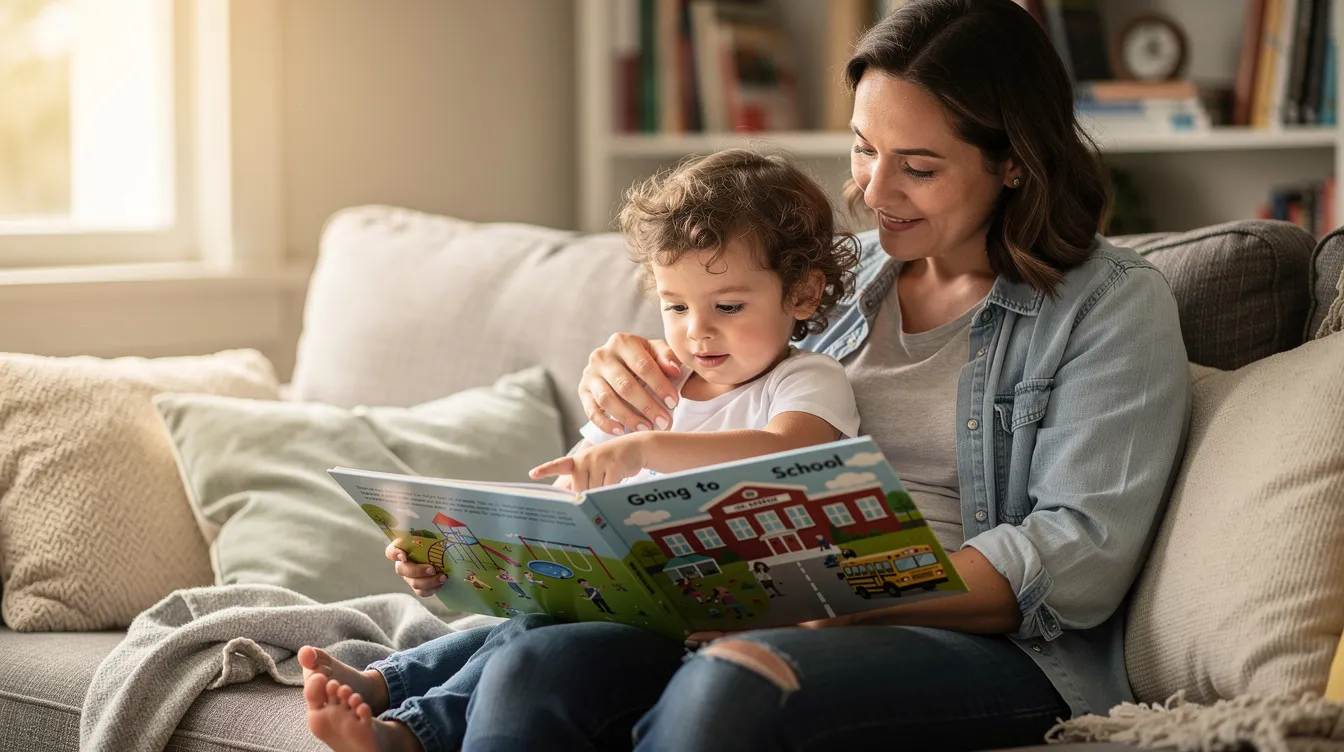
- Read stories about preschool. Reading books about starting school can help children visualize the routine. Try The Kissing Hand by Audrey Penn, Llama Llama Misses Mama by Anna Dewdney, or First Day Jitters by Julie Danneberg. Read aloud time with these titles normalizes the feelings your child may have.
- Visit the school. Parents should visit the school beforehand to familiarize their child with the environment. Visiting the school before the first day reduces anxiety, even if it’s just driving past and pointing out the playground.
- Play “pretend preschool.” Take turns being the teacher and the student at home. Practice circle time, washing hands, and lining up.
- Practice short separations. Leave your child with a grandparent or trusted friend for as long as you are both comfortable then gradually extend the time. Talk about coming back each time.
- Try deep breathing exercises. Simple “smell the flower, blow out the candle” breathing can help children manage anxiety when they feel overwhelmed.
- Validate their emotions: If they are having a hard time, let them know that is completely okay. They are allowed to feel sad, change is hard. Remind them you love them, they are safe, and you will be back.
Parents can help children settle in by talking positively about preschool before the first day. Positive communication eases children’s anxiety about preschool, and your own tone matters-children detect caregiver ambivalence. If you’re feeling guilt or worry, talk with trusted friends, other parents, or your center director about your concerns.
Programs using Lillio can share pre-recorded welcome videos and digital photo tours through the app, which families can revisit with their child as many times as needed.
1 Week Before: Routines, Logistics, and Paperwork
The week or two before the first day is the time to lock in practical routines and handle all required forms.
Routine-building tasks:
- Gradually shift bedtime and wake-up time toward the new schedule. Establishing predictable routines helps improve the transition to preschool.
- Practice the full morning routine: getting dressed, eating breakfast, brushing teeth, and leaving the house by a target time. Practicing morning routines in advance can ease the first day of preschool significantly.
Logistics and paperwork tasks:
- Confirm start date, drop-off window, and pick-up time.
- Complete enrollment forms, medical forms, allergy and action plans, emergency contacts, and photo permissions.
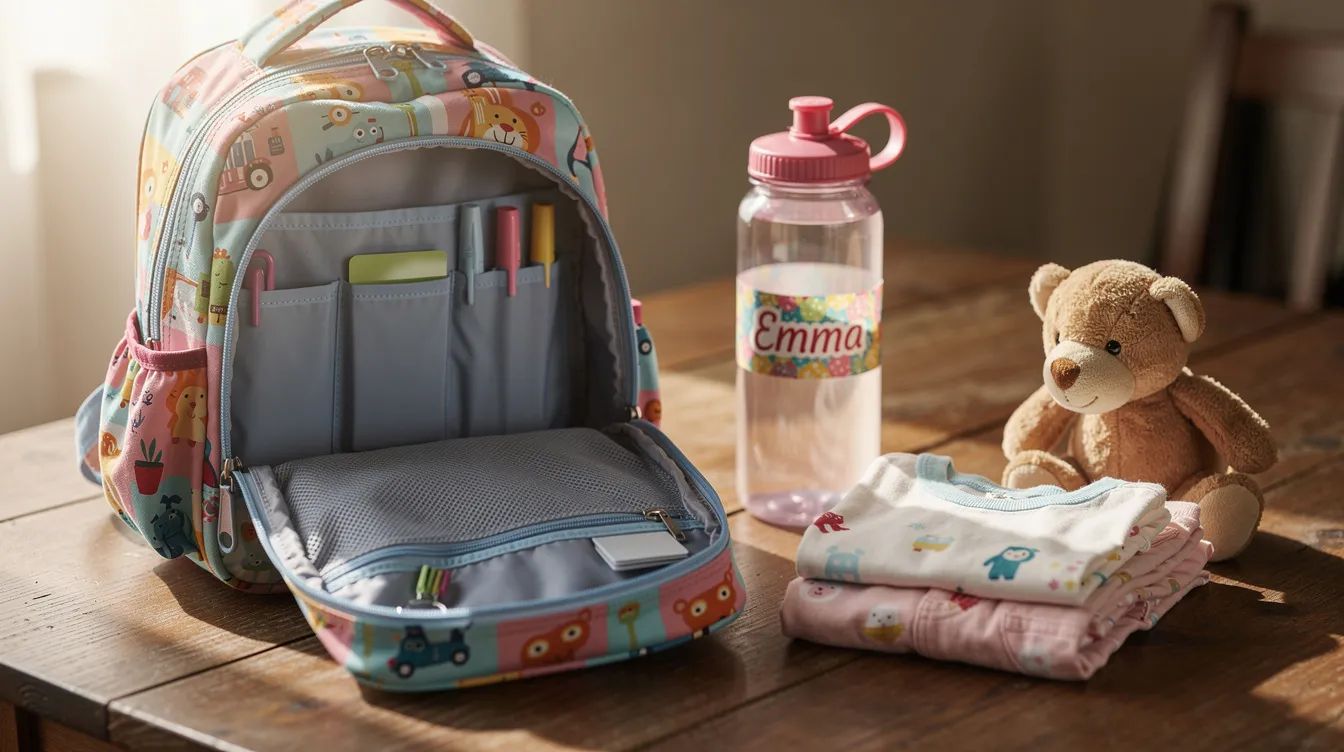
- Label your child’s belongings-backpack, water bottle, and extra clothing.
- Set up billing and payments through the center’s portal. If your program uses an all in one solution like Lillio, you can manage family information, subsidy documentation, and attendance tracking in one place.
Directors can use Lillio to send automated reminders about missing forms or immunization records, preventing first-day delays. Use a newsletter to share important details before the first day, including parking rules and arrival procedures. Store all preschool emails, PDFs, and login details in a safe place for easy reference on hectic mornings.
Orientation and Meet-the-Teacher: Making the First Day Feel Familiar
An in-person or virtual orientation, often scheduled 3–7 days before the first day, is one of the most powerful ways to reduce first-day jitters. Research confirms that exposure to the classroom environment before school begins measurably reduces anxiety symptoms in young children.
A strong orientation event can include:
- A classroom tour where children see cubbies, reading corners, bathrooms, and outdoor play areas in their new room.
- Time to meet the teacher and assistant teachers, learn their names, and hear about favorite activities.
- A simple first activity like decorating a name tag to display in their cubby on the first day.
Bring to orientation:
- A list of questions about naps, food allergies, and toileting routines
- Any medications or medical forms that need clarification
- A comfort item to help your child feel secure
Programs using Lillio can follow up orientation with digital recaps: photos of the classroom, a posted daily schedule, and a welcome message so children can revisit what they saw.
What to Pack: Practical First Day of Preschool Checklist
Packing the right items reduces stress for both families and preschool teachers. Some centers will adapt this list based on local climate and program policies.
Daily packing checklist:
| Item | Notes |
|---|---|
| Labeled backpack | For storing a comfort item or extra clothes, and a place to bring home their arts and crafts at the end of the day! |
| Two full changes of clothes | Shirt, pants, underwear, socks in a labeled zip bag |
| Diapers, wipes, and cream | If applicable, following center guidelines |
| Labeled water bottle | Plus a nut-safe snack or lunch if required |
| Season-appropriate outerwear | Raincoat and boots in fall, sunhat in summer, extra shoes for an indoor and outdoor pair |
| Comfort item | A soft toy, family photo, or special blanket cleared with the teacher |
Comfort items from home can help children feel secure, especially during the first few weeks. Children often express a need for comforting items during adjustment, so don’t hesitate to include one. Directors can share a printable or digital version of this checklist and update it seasonally, posting it in their Lillio parent app so families always have it handy.
Morning of the First Day: Drop-Off, Separation Anxiety, and Goodbye Rituals
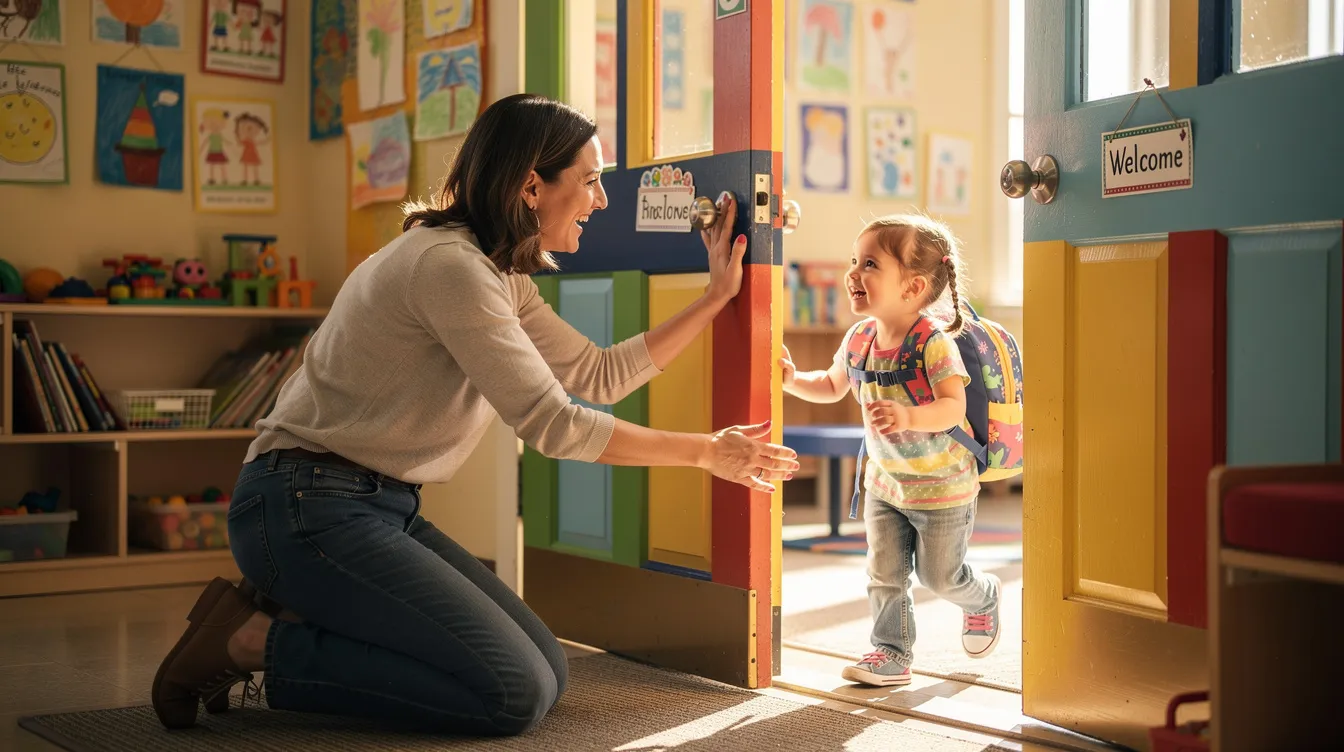
The first drop-off can be the hardest part of the first day of preschool for both children and adults. Children may experience mixed emotions on their first day, and emotional reactions are common. Expect some emotional reactions during the drop-off process-this is completely and developmentally normal.
Morning steps:
- Wake up early enough to keep the new routine calm rather than rushed.
- Offer a simple, familiar breakfast. Avoid introducing new foods that morning.
- Allow time for getting dressed and a quick photo without putting pressure on the child.
Managing separation anxiety at drop-off:
Separation anxiety can overwhelm children on their first day for the first time in a new environment. Practicing quick, confident goodbyes can aid in smoother transitions. Teachers recommend keeping goodbyes short, positive, and consistent.
- Agree in advance on a goodbye ritual: “Two hugs, one high-five, then I go to work and you play.”
- Use concrete phrases like, “I will come back after afternoon snack.” Assuring children you’ll return soon and in a way they can understand and picture can help ease their anxiety.
- Never sneak out, even when leaving during tears feels easier.
- Comfort items from home can help ease separation anxiety-place one in the cubby before you leave.
Early childhood educators are experts at what they do, and they know how to comfort children during drop-off. Many create calm-down corners to support anxious children, and the focus on the first day is on helping children settle in and feel safe, rather than engaging in all the learning activities.
Centers using Lillio can send a reassuring photo or short update within the first hour, showing the child engaged in play, which often helps put parents and caregivers at ease.
During the Day: New Experiences, New Friends, and How Communication Helps
From your child’s perspective, the first day is filled with new experiences: circle time, outdoor play, snack, rest time, and many unfamiliar sounds, routines and people. Children gradually learn classroom routines such as circle time and handwashing while building independence step by step—skills that will support self-regulation over time.
Developmental opportunities on day one:
- Meeting new friends and practicing early social skills like sharing, taking turns, and joining a group game
- Exploring materials such as blocks, playdough, paint, and picture books that support early learning
- Learning to line up, wash hands, and tidy up, which build confidence and stability through routine
Why parent communication matters:
Real-time communication helps families feel secure. Daily activity reports keep families updated, and teachers can send two or three key updates through childcare management software like Lillio: a first smile after drop-off, a brief note about nap, or a photo of their child at play. Parents can send quick messages back if there are last-minute notes about napping, eating, or toileting needs, or just to express their appreciation for the thoughtful communication.
Communication should be brief and focused on reassurance during the first day, so educators can stay present with children while still keeping families in the loop. This kind of family engagement builds trust from day one.
After Pick-Up: Debriefing, Routines, and Looking Ahead
The first afternoon after preschool sets the tone for day two and beyond. Children may feel tired after their first day due to new experiences, and children may take time to process their day, leading to quieter behavior afterward. This is completely normal.
Pick-up and the ride home:
- Greet your child with warmth and interest rather than a barrage of questions.
- Use open-ended, simple prompts: “What was your favorite thing today?” For more ideas, explore tips on talking to your toddler about their preschool experience.
If your child says they didn’t like it:
- Validate feelings: “It’s okay to miss home and still have fun there.”
- Remind them of one positive moment. If your center uses Lillio, check the daily reports for photos or notes that can help you write a supportive narrative together.
Evening routines for a smoother second day:
- Serve a familiar, easy-to-eat dinner and allow time for winding down.
- Keep bedtime steady, even if your child seems overtired from the new schedule.
- Prepare the backpack, clothes, and comfort item for the next day together.
Adjustment to preschool can take a few days to several weeks. Stay patient, keep the routine consistent, and look forward to watching your child grow. Encourage parents to check the day’s digital report in their Lillio app for photos, meals, naps, and activities-to fill in gaps and celebrate new skills at home.
How Centers Can Adapt This Checklist and Use Technology to Support Families
Directors and teachers: this article is designed as a ready-to-share resource. Here’s how to make it your own.
Customize for your center:
- Add center-specific policies about food, allergies, nap items, and arrival procedures.
- Include local details like typical weather gear, parking rules, or building security steps.
- Translate the checklist into the top home languages represented in your program to serve every family.
How Lillio supports first-day success:
Lillio’s platform helps centers manage daily operations, staff scheduling, billing, compliance, attendance, and training alongside the tools that matter most to families. Use Lillio to send pre-start orientation reminders, first-day checklists, and FAQs in one secure place. Share daily reports with photos, nap times, and meals so parents see what their child experienced. Keep all family forms, medical information, and emergency contacts organized and accessible to staff. Because parent involvement shapes outcomes throughout the school year, investing in supportive communication from the start pays off across every week that follows.
Centers and families are on the same team. Thoughtful preparation plus clear, ongoing communication can turn a potentially stressful first day into the beginning of a joyful preschool journey. To learn how Lillio can help your center participate in that process, explore Lillio’s parent engagement features.


Maddie is a Registered Early Childhood Educator with a Master's in Early Childhood Studies. Her specialty is in Children's Rights and she is currently Manager, Content Marketing at Lillio!
More by Maddie


Maddie Hutchison, ECE
August 4th, 2026
10 mins
Related Articles

A Back-to-School Message from Alana, CEO & Co-Founder of Lillio
September 9th, 2026 | Lillio
